Ports, PICCs, and PEG Tubes Oh my…
Well, for starters, it’s the way into my bloodstream and body. Sounds weird—because it is. Then you get used to it.
Before I head down that path, let’s start with landing the right oncology team. It took a few appointments to realize that Texas Oncology had zero sense of urgency for me. I needed another doctor. Thankfully, Dr. Patrizio Polanco, the surgeon I was already connected to at UT Southwestern, recommended Dr. Suzanne Cole in Richardson. We got an appointment right away, and she assured me I’d have chemo within a week—with or without the MediPort.
The MediPort
The MediPort is a device surgically inserted into your chest. Honestly, it reminded me of the Star Trek emblem, protruding just enough under the skin to gross me out—ewww. A tube runs from the port into a major vein near the neck, allowing chemo medicine to dilute quickly in the blood near the heart.
As unsettling as it was, the port quickly became a blessing. Once accessed (yes, with a needle), it meant I could receive chemo, other medicines, blood draws, and even CT scan contrast—all without needles in my arms. No more getting poked over and over. Thank God!
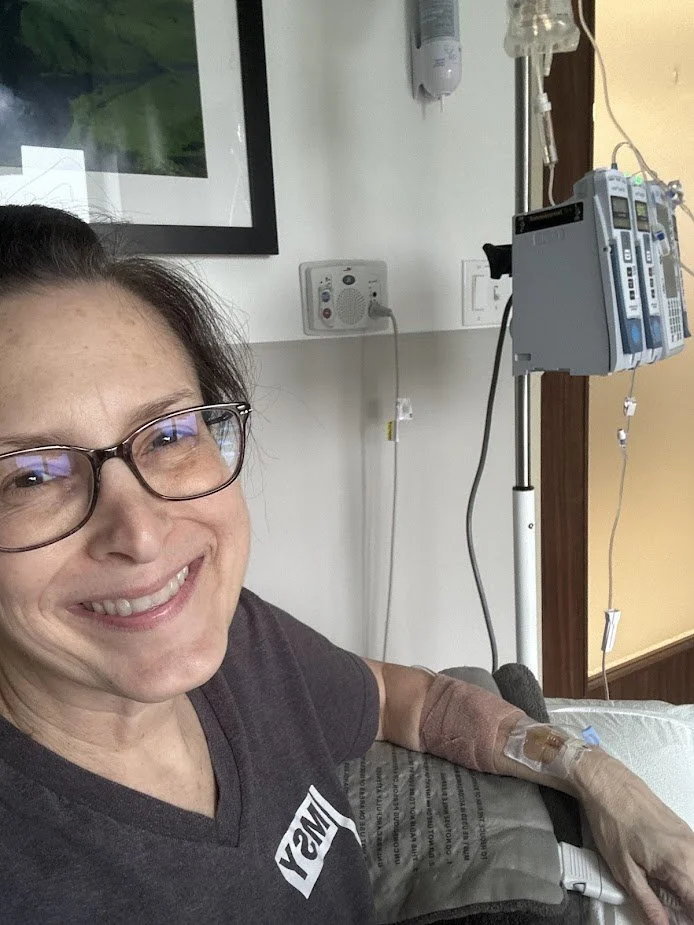
My first chemo was through an IV because the port wasn’t in yet, but by round two, the MediPort was ready.
Chemo Side Effects
The first session wasn’t bad. I could eat, though I was fatigued. Then came the cold sensitivity from one of the drugs. I couldn’t touch anything cold or drink ice water—it felt like glass cutting my hands and throat. By day five, it usually eased.
My chemo schedule is every two weeks with a recovery week in between. At least, that’s the idea. But by round two, I got really sick.
Bile Reflux and Blockages
The culprit? Bile reflux. My bile wasn’t doing its job, and I started vomiting—projectile, violent vomiting like a scene out of The Exorcist. The pain was excruciating.
After several ER trips, I was admitted to UT Southwestern for nearly three weeks. That’s when they discovered not one but two blockages in my small intestine. With nowhere for bile or food to go, my body was in crisis.
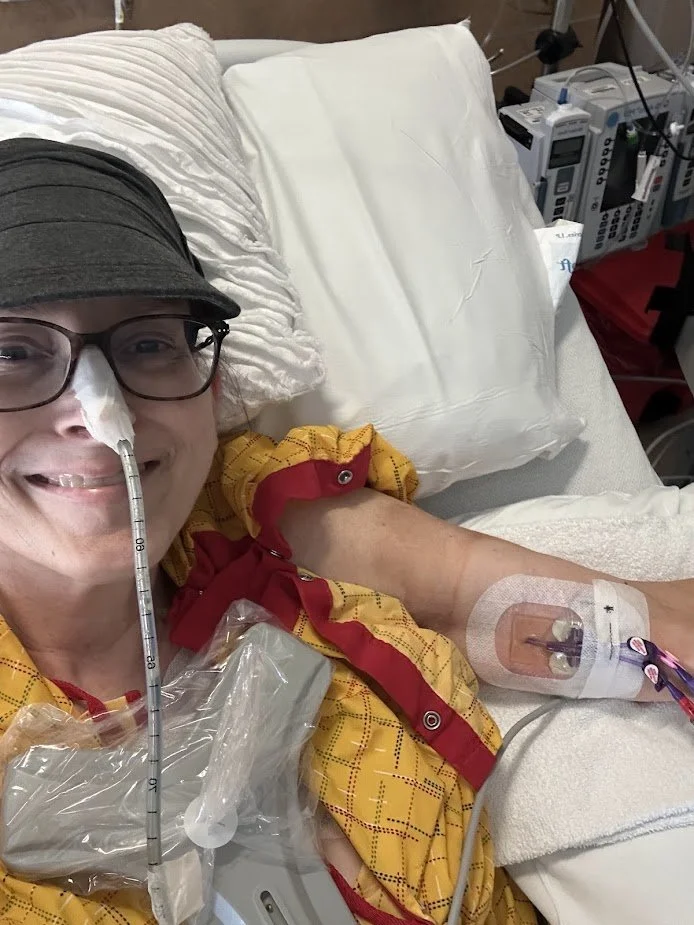
The first step was an NG tube shoved down my nose into my stomach to decompress it. That was, without exaggeration, the most painful and violent experience I’ve ever had. Pain meds weren’t even for the cancer—they were just to handle the tube.
PICC Line and TPN
During my hospital stay, I couldn’t eat. I was limited to clear liquids. To keep me alive, I was put on TPN (Total Parenteral Nutrition), nutrients delivered through an IV.
For this, they inserted a PICC line—a catheter that runs through the arm into the veins near the heart. Since mid-June, I’ve been on nightly TPN at home, with Jerry administering it to give me the calories, macronutrients, and vitamins I need.
PEG Tube
The GI and surgery teams worked together to find next steps. Communication was tough—between the pain and the NG tube, I could hardly talk. Thankfully, Angela brought me a whiteboard, markers, and notebooks. That became my lifeline.
The GI team attempted a deep endoscopy to bypass one of the blockages. They were able to address one but not the second. The silver lining? They took out the nose tube. The downside? They placed a PEG tube directly through my stomach to drain bile into a gravity bag.
Now, I carry that bag with me everywhere. Whenever I start to feel sick or nauseous, I vent my stomach. It’s messy. It’s my new normal.
Living with Hunger
I crave food. I dream about it. I even watch the Food Network, as counterintuitive as it sounds. I’ll never take eating for granted again.
As of now, I’ve completed nine chemo sessions. My next CT scan is October 21, with surgery scheduled to be discussed October 30. The hope is still to shrink the mass enough to remove it.
Reflection
Each week has brought something new - another device, another tube, another adjustment. At first, each one felt like a loss. But slowly, I’ve realized they’re also lifelines. They are imperfect, uncomfortable, and often painful, but they keep me here. What once felt like defeat now feels like survival.
This journey has taught me that resilience isn’t about pretending things aren’t hard - it’s about carrying on because they are hard. If you’re walking through your own storm, remember: the tools, the people, and even the strange new normals you collect along the way can all become part of how you keep going.
Coming Next
In my next article, I’ll share where I am now and talk about the “dark side” of this journey—the emotional impact that weighs just as heavily on me, my family, and my friends.
With gratitude for this journey,
KC